How to Close Out Your Appointment Schedule Each Day
Closing out your schedule means updating what happened and preparing the next day. It is not an accounting close: the goal is for your bookings and open items to reflect how the business really ran.
By the Citalu team
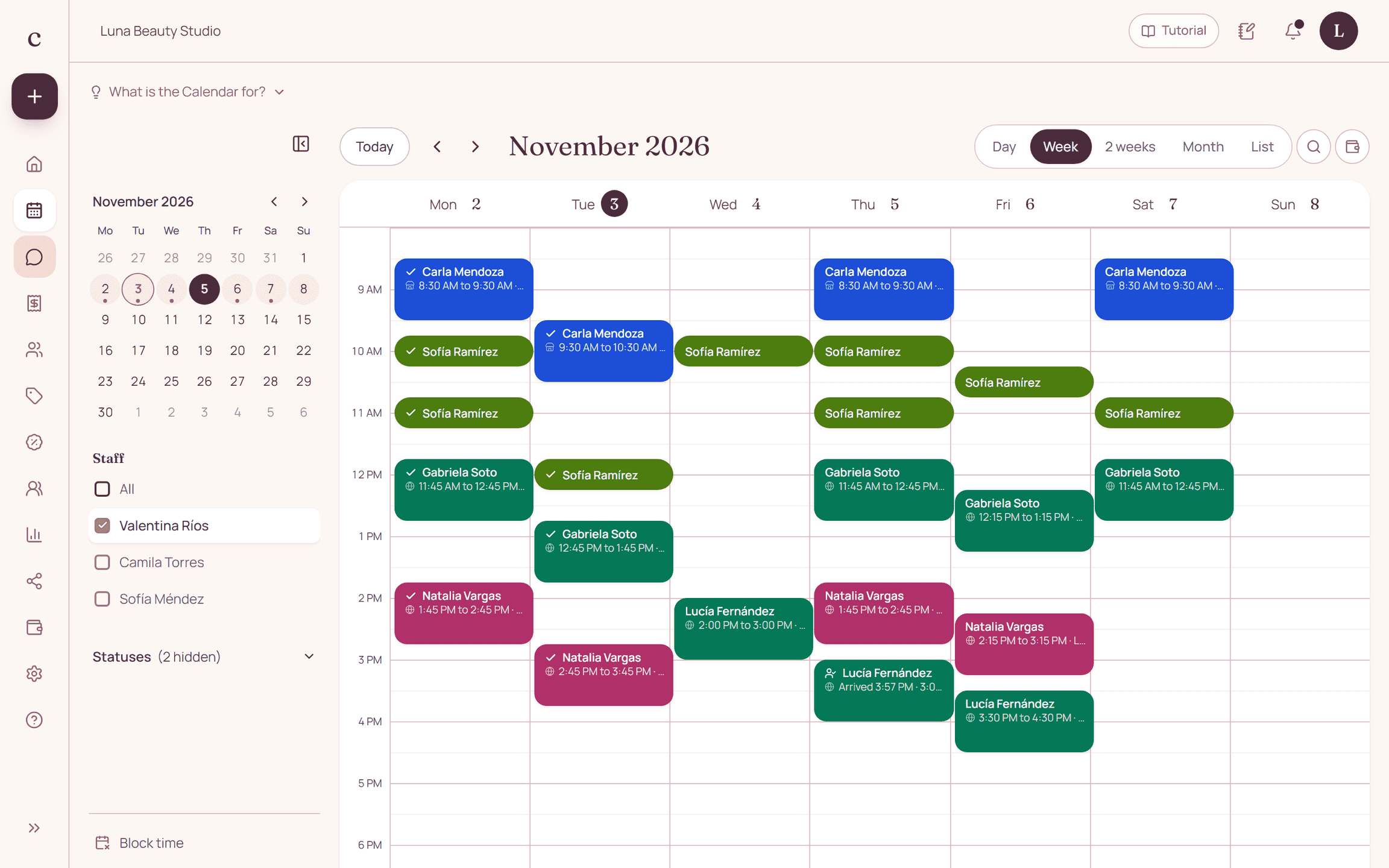
Update what happened
Review the day's appointments and record the right status for each. Tell a cancellation, a no-show and a completed visit apart. Don't mark everything as attended just to empty a list, because your reports will then describe a day that didn't happen.
Resolve open booking items
Check the receipts waiting for review and the requests that are about to expire. If something depends on a clarification from the client, leave a specific operational note and a person in charge. A note that just says "pending" without saying what's missing forces you to investigate again tomorrow.
Prepare the next day
Review the first appointment, long services, team time off and room coordination. Booking or payment reports don't replace bank reconciliation or accounting. Keep clear what you are closing and what you need to check in another record.
How to put it into practice
- Update the day's statuses.
- Review pending receipts and changes.
- Check the start of the next day with the team.
A common question
Is this close the same as balancing the cash drawer?
No. It is an operational close of appointments. The cash drawer and reconciling money need their own review.
Bring that order to your schedule
Try Citalu with your services and hours. You get 14 days free to see if it fits your business.